2018-2024
PWK 28mm bored- Main Jet
- 145
- Pilot Jet
- 45
- Needle
- NRKC OEM
- Clip
- Clip 3
- Air Screw
- 1.5-2 turns out
- Baseline
- 1,000 ft / 75-80 deg F
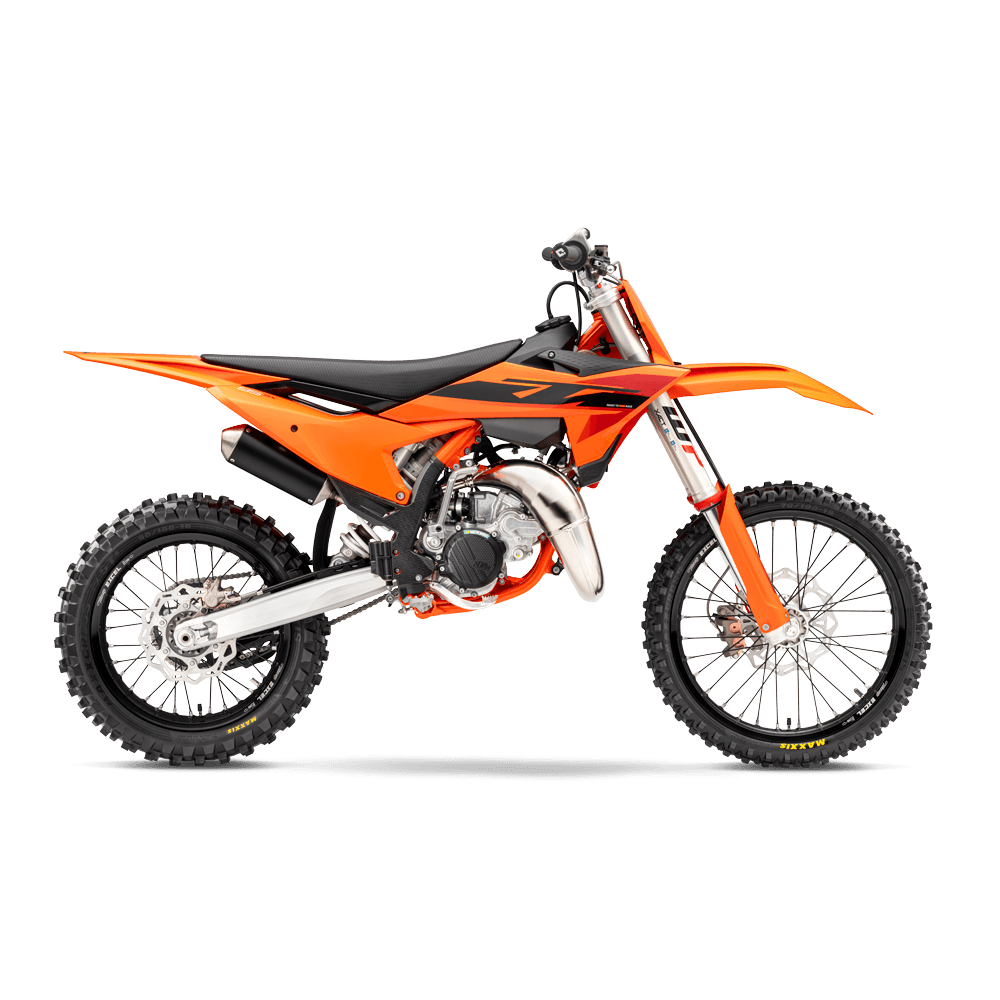
HP Race Development baseline specs, RAD adjustment tables, and Keihin jet math for KTM 85 bored carb setups.
Use these as starting points for HP Race Development modified KTM 85 carburetors. Final jetting still needs to be verified at race-day conditions.
The 2025+ platform has different pilot needs. Contact HP Race Development before treating older pilot specs as a direct swap.
Pump gas and standard race fuels follow these starting points. High-oxygenated fuels may require richer settings. Always plug chop.
A two-stroke carb has overlapping circuits, so the order matters. Get the lower circuits honest before chasing the main jet.
Start at 1.5 turns out. Adjust at idle for the crispest response. If it wants more than 2.5 turns, go up one pilot size. If it wants less than 1 turn, go down one pilot size.
Clean up throttle pick-up from idle and through slow technical sections. Hesitation off corners points lean; loading up and blubbering points rich.
Tune the 1/4-3/4 throttle roll-on feel. Higher clip number is richer. Lower clip number is leaner.
Once the lower circuits are right, use RAD math for the main jet and verify at full throttle with a plug chop.
Relative Air Density estimates how much oxygen is available compared with sea-level standard conditions. Higher RAD wants more fuel; lower RAD wants less.
Baseline is about 93% RAD.
These circuits overlap. A change in one area can show up somewhere else, especially needle straight diameter at low throttle.
Broad in-day trim
Idle to 1/2 throttle overlap
Initial opening transition
Low throttle fuel leak / control
Midrange fuel curve
Needle height
Top-end / WOT
Main jet changes follow Keihin diameter math. On a close call, choose the richer jet and verify under load.
| Conditions | RAD | Main | Pilot | Needle | Air Screw |
|---|---|---|---|---|---|
| Sea level, 60 deg F, dry | 100% | 152 | 48 | Clip 4 | 1.5 out |
| Sea level, 75-80 deg F | 96-97% | 148 | 48 | Clip 3 | 1.5-2 out |
| HP baseline - 1,000 ft, 75-80 deg F | ~93% | 145 | 45 | Clip 3 | 1.5-2 out |
| 2,000-3,000 ft, 70-80 deg F | 87-90% | 142 | 45 | Clip 2 | 2 out |
| Hot / humid low altitude | ~88-90% | 138 | 40-42 | Clip 2 | 2 out |
| 3,000-4,000 ft, 70-80 deg F | 84-87% | 138-140 | 42 | Clip 2 | 2 out |
| 5,000+ ft, 70-80 deg F | 80-84% | 135 | 42 | Clip 1, consider leaner needle | 2-2.5 out |
| Conditions | RAD | Main | Pilot | Needle | Air Screw |
|---|---|---|---|---|---|
| Sea level, 60 deg F, dry | 100% | 152 | 55 | Clip 4 | 1.5 out |
| Sea level, 75-80 deg F | 96-97% | 148 | 55 | Clip 3 | 1.5-2 out |
| HP baseline - 1,000 ft, 75-80 deg F | ~93% | 145 | 52 | Clip 3 | 1.5-2 out |
| 2,000-3,000 ft, 70-80 deg F | 87-90% | 142 | 52 | Clip 2 | 2 out |
| Hot / humid low altitude | ~88-90% | 138 | 48-50 | Clip 2 | 2 out |
| 3,000-4,000 ft, 70-80 deg F | 84-87% | 138-140 | 50 | Clip 2 | 2 out |
| 5,000+ ft, 70-80 deg F | 80-84% | 135 | 48 | Clip 1, consider leaner needle | 2-2.5 out |
Keihin jet numbers are based on orifice diameter in hundredths of a millimeter, so the fuel-flow change follows area, not straight diameter.
New Jet = sqrt(Current Jet^2 x (New RAD / Old RAD))
Example: if a 148 main is correct at 100% RAD and race-day RAD drops to 94%, the math lands near 143.5. Round to the richer available Keihin size, so you would start with a 145.
Baseline is clip 3. Each clip change is roughly a 6% RAD correction. Once you run out of clip range, switch needle taper instead of forcing the fix with jets alone.
For a main jet read, run full throttle under load, cut throttle and kill the engine together, coast in, and inspect the plug immediately.
Need setup help?
These specs are starting points from dyno and track testing. Conditions, fuel, engine health, and rider load still matter.